UK Makes Aviation History with First Flight of Fully Autonomous Royal Navy Helicopter
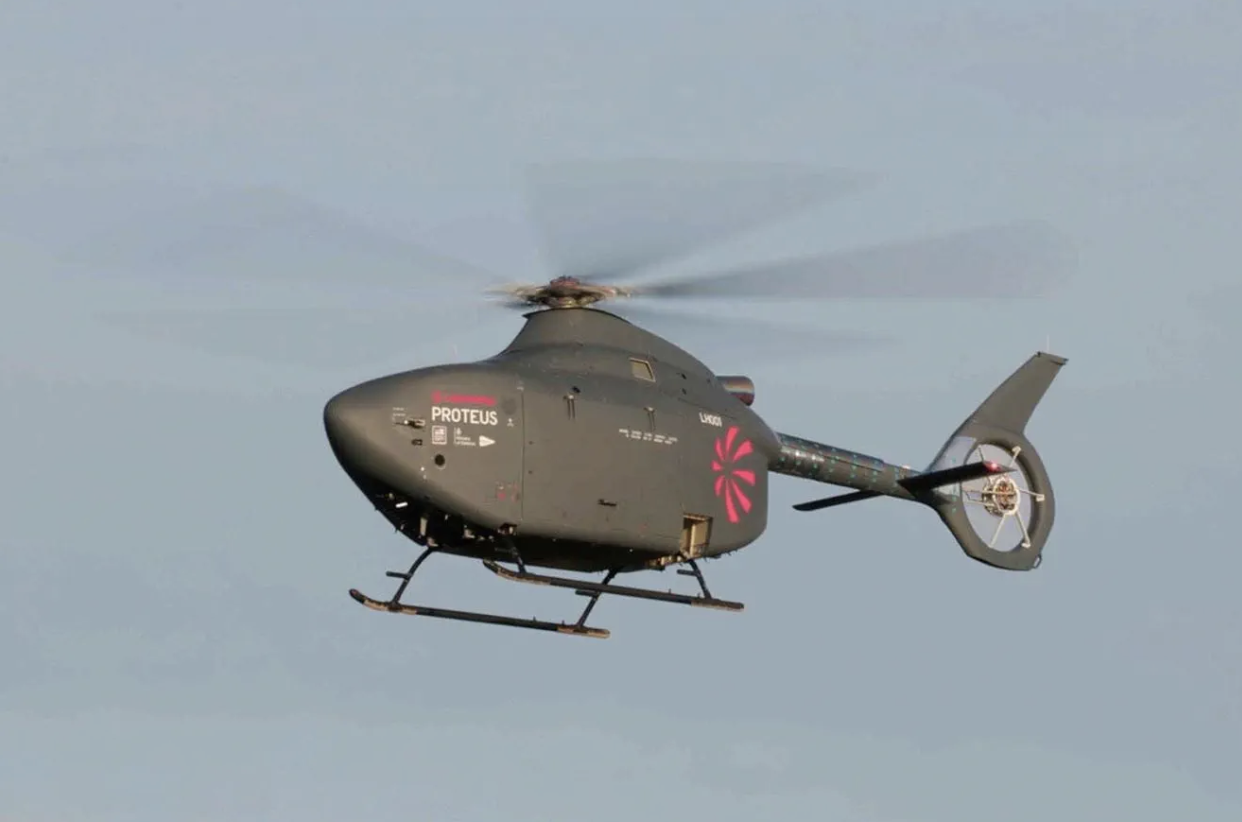
British aviation has achieved a major milestone with the maiden flight of the UK’s first fully autonomous, full-size helicopter at Predannack Airfield in Cornwall. The aircraft, developed by Leonardo for the Royal Navy, is intended to demonstrate how uncrewed aerial systems can operate alongside crewed aircraft within future hybrid air wings, including potential use in anti-submarine operations under the Atlantic Bastion strategy.
The helicopter flew only weeks after completing a series of ground-running trials at Leonardo’s Yeovil facility, where its engines, sensors, and onboard systems were tested. The first flight was observed by engineers, technicians, and representatives from Leonardo, the Royal Navy, and UK Defence Innovation. Predannack, which supports helicopters from nearby RNAS Culdrose, also serves as the National Drone Hub and plays a crucial role in the development of autonomous and uncrewed systems.
The successful test flight aligns with commitments set out in the Strategic Defence Review, which outlined plans for a “New Hybrid Navy” combining crewed and autonomous aircraft. Although the Royal Navy already operates several uncrewed platforms, including Malloy octocopters and the smaller Peregrine helicopter, Proteus is larger, more advanced, and capable of a far higher degree of autonomy.
Known as the Proteus Technology Demonstrator, the helicopter was designed and manufactured at Leonardo’s Yeovil site as part of a £60 million programme supporting around 100 skilled UK jobs. It is believed to be among the first full-sized autonomous helicopters globally. Instead of carrying a crew, the aircraft relies on sensors and computer systems powered by advanced software that allows it to interpret its surroundings, make decisions, and act independently.
Proteus has been designed to undertake missions such as maritime patrol and anti-submarine warfare, using information shared by allied ships, helicopters, submarines, and detection systems to locate and track underwater targets. Aircraft of this type are a key element of the Ministry of Defence’s Atlantic Bastion programme, which aims to strengthen the UK’s ability to defend its waters and those of its NATO allies across large areas of the North Atlantic.