Dance Until You’re Dead - The Dancing Plague of 1518
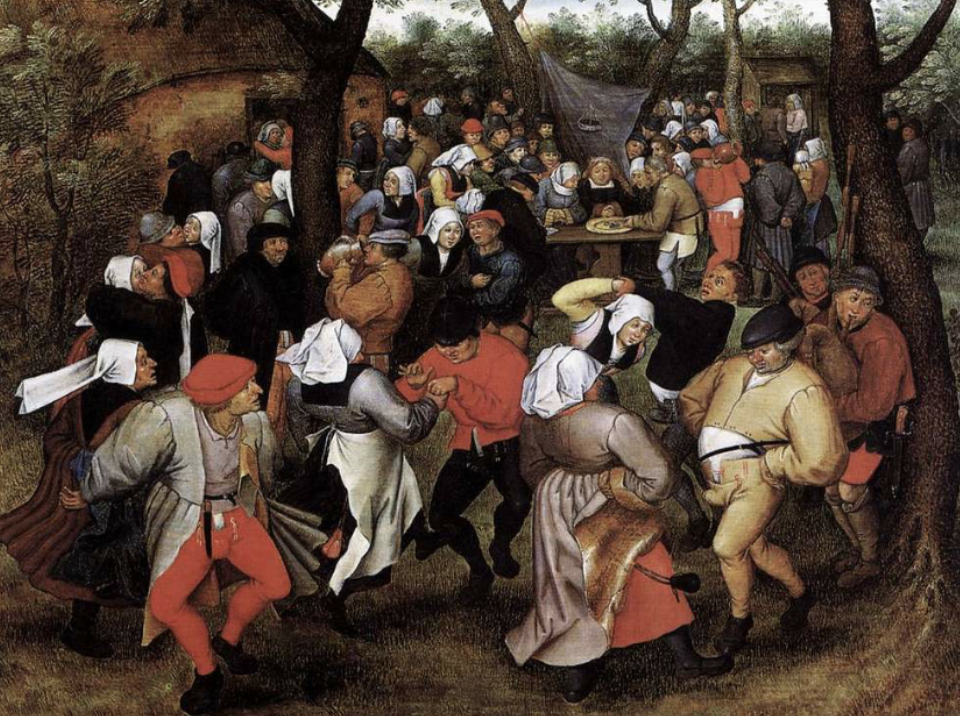
Imagine hearing about a disease outbreak in your town. Nothing to worry about, probably just a common cold. Then you step outside and see…dancing? The people dancing have faces contorted with pain. In fact, the streets are littered with them. Dancing, dancing, and dancing. What exactly is going on here?
This was the Dancing Plague of 1518 that occurred in Strasbourg in the Holy Roman Empire, or present-day France; the cause of it is still debated today. It was mid-July when the citizens of Strasbourg first began showing symptoms, but to debunk this baffling epidemic, we have to go through the facts one by one.
First things first are the symptoms. Victims of the plague had convulsions and spasms while their arms flailed around vigorously. The intense movements caused by the condition and the July weather led to sweat-drenched bodies for those affected. Hallucinations were also reported, with some having vacant looks in their eyes as they danced. Victims were also hysterical with laughter, crying, and extreme emotional suffering. Their feet began to bleed from hours of being on their feet. After a while, individuals would succumb to heart attacks or die of hunger, thirst, or exhaustion.
How did this start? Well, it began with a woman named Frau Troffea exhibiting the first symptoms as she danced in the town for no apparent reason without pause. As the days passed, more people began to join her until there were dozens. Though numbers are still debated, historians say by August, those dozens transformed into hundreds, and most of the town was infected by the dancing.
Why this occurred, we are not sure, but we have theories. The first one believes the dancing plague was attributed to mass psychogenic illness (MPI). American medical historian John Waller verifies that there were famines, multiple diseases, local beliefs, and other stressors that could contribute to this. Particularly, community sentiment that St. Vitus, a patron saint of those with epilepsy, dancers, and actors, would curse citizens with never-ending dancing if they displeased him.
The second theory blames the dancing plague on ergot poisoning. Ergot is a fungus that thrives on damp rye and causes convulsions and hallucinations, similar to the symptoms of the dancing plague. Though this theory is the weaker of the two due to the fact that ergot restricts blood flow and would not allow victims to dance. Additionally, the spread of the disease does not fit the ergot poisoning.
Though there are countless theories on what caused the dancing plague, we may never know. Historians, psychologists, and medical professionals may debate it forevermore. But who knows? Maybe someday we will find out what caused dozens of people to dance until they died. Until then, be careful the next time you’re on the dance floor and think of what may have happened if you lived in 1518 Strasbourg.