The fine print in President Trump's “Big Beautiful Bill” could restrict students who need loans most
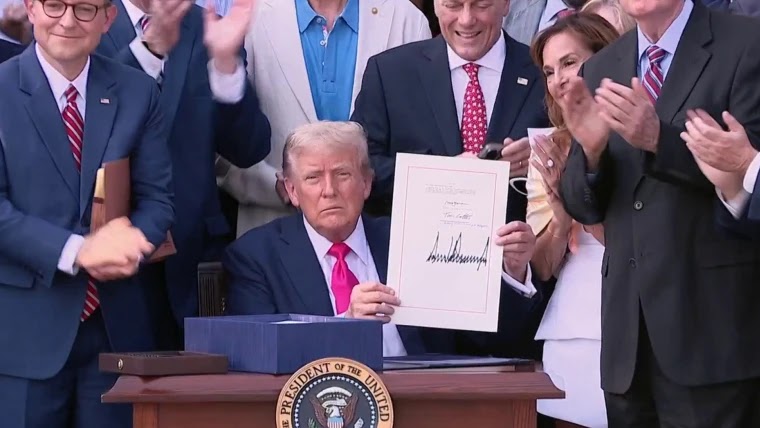
President Donald Trump signed the One Beautiful Bill Act into law on July 4, 2025, publishing headlines focusing on tax cuts and spending. Buried deeper is a rewrite of the federal student loan system that will reshape who can afford a college education for the worse. Initiating on July 1, 2026, the law will eliminate the Grad PLUS loan program, which has a strong history in assisting graduate and professional students to borrow the full cost of school tuition. In place of this, the government is providing larger caps: $20,500 a year and $100,000 total for graduate students, $50,000 a year and $200,000 total for professional students in law or medical school. A new lifetime cap of $257,500 will apply across a borrower’s academic career, undergraduate through graduate school. At first glance, these figures come across as generous. They are likely to fall short of what many students attending high-cost universities require to receive an education. A student at a private university pursuing a medical or law degree can easily expect to face annual costs well above $50,000 once tuition, fees and living expenses are accounted for. Adjusting to these new limits, the gap between government financial support and the finances needed to attend will require action from students and their families. This will inevitably lead individuals to seek private loans, often at exceedingly high interest rates that come with less protection and stability.
Students depending on private loans face many consequences. Private lenders tend to demand a creditworthy co-signer, an obstacle that can prevent first-generation and lower-income students who lack family members that qualify to gain access to needed loans. On the other side of the argument, even families who qualify and can secure financing from private loans may encounter different rates, strict terms and high repayment obligations, ending in complications and exponential debt greater than the initial federal loan. The final decision that students may be forced to make for their education could include attending a less prestigious, expensive school, exploring a different career path, or not pursuing school at all. Defenders of this law have established a well-thought-out case, arguing that putting an unlimited budget on federal borrowing has allowed universities to raise tuition prices without consequences for years, as a cycle of students borrowing more to cover the increase has unfolded. Cutting off loan amounts, from this standpoint, forces schools to “price match,” pushing families closer to more affordable options. Those in support of this bill have also made it known that simplified repayment plans created by the law, such as the new Repayment Assistance Plan, grant students predictable monthly payment plans that are easier to borrow, even if their loan is a smaller price to pay. The two sides of the argument deserve to be heard. But the practical effect on students who have already been admitted to expensive programs, particularly those studying a professional field, is a deepening gap between the aid available to pay for education and the cost of a degree that outshines it. The Department of Education and Congress have unfortunately finalized this decision this past July 1, locking out the very students for whom the loan program was initially designed to serve.