Southwest Airlines’ New Cockpit Barrier Makes Flying Safer
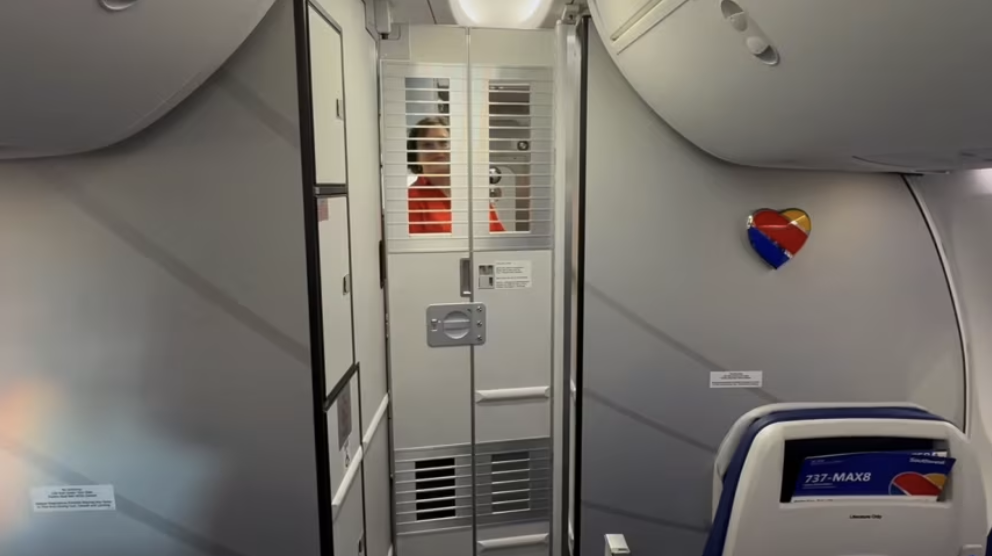
Recently, if you have traveled by air, perhaps you haven't observed all the safety features of the airplane, but nevertheless, some of them are very important. Starting from August 29, 2025, Southwest Airlines has begun operating its newly delivered Boeing 737 MAX 8 aircraft with a secondary cockpit barrier, which is a retractable, folding door that acts as an additional security layer in front of the cockpit and gets opened when a pilot wants to exit the cockpit.
This is not a sudden change at all. The FAA made this safety barrier compulsory for all new commercial aircraft in the United States in 2023, but airlines were given time until mid-2026 to implement it. Nevertheless, Southwest didn't wait. By fitting the barriers on all its newly delivered aircraft straight away, the airline displayed its priority of crew and passenger safety and acted accordingly.
The barrier not only enhances security that was not so common before but also prevents unauthorized access to the cockpit. In addition, it indicates that, even if the 9/11 tragedy taught the aviation industry a thing or two, the safety of air travel is still a matter of continual improvement and innovation.
Surely, the installation of the barrier is not as simple as gluing it to the aircraft. The structure has to be very precisely fitted in the airplane so that it doesn’t obstruct the pilots’ work at all. Southwest's decision to be one of the first to adopt this technology is a clear indication of its commitment to safety and willingness to be seen as exemplary by other airlines.
This little, yet important, feature is one of the things that contribute to the safety of flying today. It allows pilots to focus on their job without fear of potential threats. It serves as an alert that a lot of smart technology, careful planning, and, more so, being proactive, have to be employed by many people for a successful flight, amidst all these modern-day conveniences.