Hundreds of Canadian wildfires bring smoke south
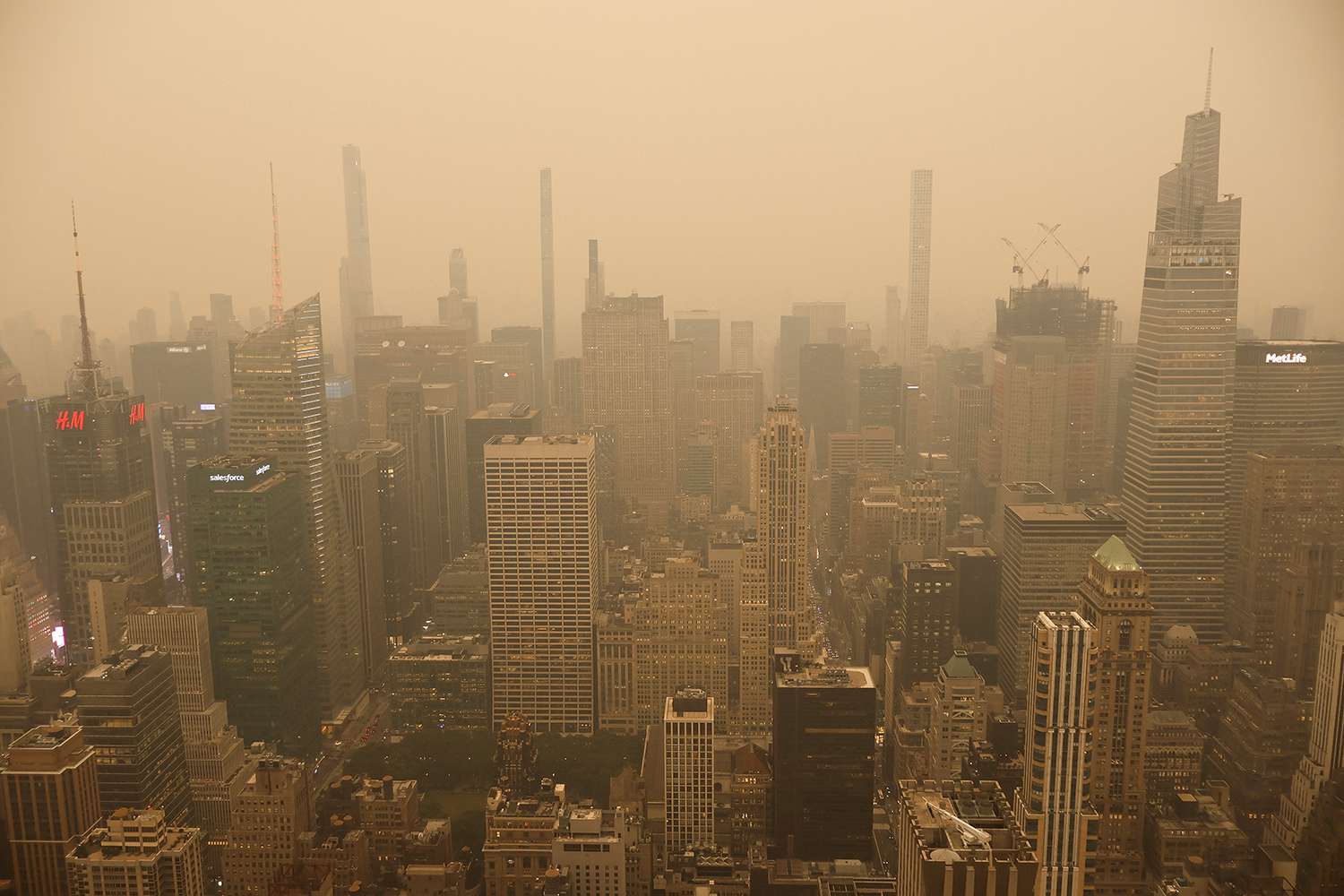
The American Northeast is known for its harsh winters, but recent Canadian fires have made summer dangerous for many in the region.
Monday, July 13, more than 800 wildfires throughout Canada brought hazardous smoke south. Air quality indices have been in focus in much of the northern and eastern United States, the smoke having prompted warnings and safety alerts for citizens to avoid the outdoors.
Parks, beaches, and public exposure have halted since Monday, with entire skies painted a dark, hazy gray, and the Sun often a faded and heavy orange. Cities like “Chicago, Cleveland, Detroit, Minneapolis [and] Toronto” have reached dangerous exposure levels, per Jones, Bogel-Burroughs and Levenson of the New York Times. Other metropolitan cities have dealt with unhealthy air quality readings, as the smoke is predicted by sources at the New York Times to linger throughout the weekend in the Midwest, but ease out slightly in the Northeast.
The Air Quality Index, a metric often referred to as AQI, measures quantitatively the atmosphere’s danger. A low AQI value is healthier for the public.
In Minnesota, the AQI has reached 1,421, a value “nearly five times higher than the minimum level considered to be hazardous,” according to KRON4.
Wildfire smoke can cause a range of pulmonary diseases, but can also pose higher risks for pregnant women and children, for example. With warnings sent out in many affected cities to avoid direct exposure, city life has screeched to a halt throughout the North.